GeneTalk is a web-based platform, tool, and database for filtering, reduction and prioritization of human sequence variants from next-generation sequencing (NGS) data. GeneTalk allows editing annotation about sequence variants and build up a crowd sourced database with clinically relevant information for diagnostics of genetic disorders. GeneTalk allows searching for information about specific sequence variants and connects to experts on variants that are potentially disease-relevant. == Application to diagnostics == Users can upload NGS data in Variant Call Format (VCF) onto the GeneTalk server into their accounts. All entries of the file are preprocessed and shown in the integrated VCF viewer. Filtering tools are set by the user to reduce the number of clinically non-relevant variants. After filtering and prioritization users can interpret relevant variants by retrieving information (annotations) about variants from the GeneTalk database. The communication platform allow users to contact experts about specific variants, genes, or genetic disorders, to exchange knowledge and expertise. === Analysis procedure === Steps required to analyze VCF files Upload VCF file Edit pedigree and phenotype information for segregation filtering Filter VCF file by editing the filtering options View results and annotations Add annotations === Filtering tools === The following filtering options may be used to reduce the non-relevant sequence variants in VCF files. Functional – filter out variants that have effects on protein level Linkage – filter out variants that are on specified chromosomes Gene panel – filter variants by genes or gene panels, subscribe to publicly available gene panels or create own ones Frequency – show only variants with a genotype frequency lower than specified Inheritance – filter out variants by presumed mode of inheritance Annotation – show only variants with a score for medical relevance and scientific evidence == Communication platform and expert network == Users can share VCF files with colleagues and coworkers. The integrated mailing systems allows users to contact experts easily. Users can create annotations and comments and rate annotations regarding medical relevance and scientific evidence, that is helpful for the community of users for diagnosis of genetic disorders. Registered users provide information about their field of knowledge in their profile and can be contacted by other users. == Potential applications == Developing diagnostics Genetic analysis Capturing data generated by community Communication and exchange of knowledge and expertise
Cybernetics
Cybernetics is the transdisciplinary study of circular causal processes such as feedback and recursion, where the effects of a system's actions (its outputs) return as inputs to that system, influencing subsequent actions. It is concerned with general principles that are relevant across multiple contexts, including engineering, ecological, economic, biological, cognitive and social systems and also in practical activities such as designing, learning, and managing. Cybernetics' transdisciplinary character means that it intersects with a number of other fields, resulting in a wide influence and diverse interpretations. The field is named after an example of circular causal feedback—that of steering a ship (the ancient Greek κυβερνήτης (kybernḗtēs) refers to the person who steers a ship). In steering a ship, the position of the rudder is adjusted in continual response to the effect it is observed as having, forming a feedback loop through which a steady course can be maintained in a changing environment, responding to disturbances from cross winds and tide. Cybernetics has its origins in exchanges between numerous disciplines during the 1940s. Initial developments were consolidated through meetings such as the Macy conferences and the Ratio Club. Early focuses included purposeful behaviour, neural networks, heterarchy, information theory, and self-organising systems. As cybernetics developed, it became broader in scope to include work in design, family therapy, management and organisation, pedagogy, sociology, the creative arts and the counterculture. == Definitions == Cybernetics has been defined in a variety of ways, reflecting "the richness of its conceptual base". One of the best known definitions is that of the American scientist Norbert Wiener, who characterised cybernetics as concerned with "control and communication in the animal and the machine". Another early definition is that of the Macy cybernetics conferences, where cybernetics was understood as the study of "circular causal and feedback mechanisms in biological and social systems". Margaret Mead emphasised the role of cybernetics as "a form of cross-disciplinary thought which made it possible for members of many disciplines to communicate with each other easily in a language which all could understand". Other definitions include: "the art of governing or the science of government" (André-Marie Ampère); "the art of steersmanship" (Ross Ashby); "the study of systems of any nature which are capable of receiving, storing, and processing information so as to use it for control" (Andrey Kolmogorov); and "a branch of mathematics dealing with problems of control, recursiveness, and information, focuses on forms and the patterns that connect" (Gregory Bateson). == Etymology == The Ancient Greek term κυβερνητικός (kubernētikos, '(good at) steering') appears in Plato's Republic and Alcibiades, where the metaphor of a steersman is used to signify the governance of people. The French word cybernétique was also used in 1834 by the physicist André-Marie Ampère to denote the sciences of government in his classification system of human knowledge. According to Norbert Wiener, the word cybernetics was coined by a research group involving himself and Arturo Rosenblueth in the summer of 1947. It has been attested in print since at least 1948 through Wiener's book Cybernetics: Or Control and Communication in the Animal and the Machine. In the book, Wiener states: After much consideration, we have come to the conclusion that all the existing terminology has too heavy a bias to one side or another to serve the future development of the field as well as it should; and as happens so often to scientists, we have been forced to coin at least one artificial neo-Greek expression to fill the gap. We have decided to call the entire field of control and communication theory, whether in the machine or in the animal, by the name Cybernetics, which we form from the Greek κυβερνήτης or steersman. Moreover, Wiener explains, the term was chosen to recognize James Clerk Maxwell's 1868 publication on feedback mechanisms involving governors, noting that the term governor is also derived from κυβερνήτης (kubernḗtēs) via a Latin corruption gubernator. Finally, Wiener motivates the choice by steering engines of a ship being "one of the earliest and best-developed forms of feedback mechanisms". == History == === First wave === The initial focus of cybernetics was on parallels between regulatory feedback processes in biological and technological systems. Two foundational articles were published in 1943: "Behavior, Purpose and Teleology" by Arturo Rosenblueth, Norbert Wiener, and Julian Bigelow – based on the research on living organisms that Rosenblueth did in Mexico – and the paper "A Logical Calculus of the Ideas Immanent in Nervous Activity" by Warren McCulloch and Walter Pitts. The foundations of cybernetics were then developed through a series of transdisciplinary conferences funded by the Josiah Macy, Jr. Foundation, between 1946 and 1953. The conferences were chaired by McCulloch and had participants that included Ross Ashby, Gregory Bateson, Heinz von Foerster, Margaret Mead, John von Neumann, and Norbert Wiener. In the UK, similar focuses were explored by the Ratio Club, an informal dining club of young psychiatrists, psychologists, physiologists, mathematicians and engineers that met between 1949 and 1958. Wiener introduced the neologism cybernetics to denote the study of "teleological mechanisms" and popularized it through the book Cybernetics: Or Control and Communication in the Animal and the Machine. During the 1950s, cybernetics was developed as a primarily technical discipline, such as in Qian Xuesen's 1954 "Engineering Cybernetics". The text was quickly translated into multiple languages and became a foundational text on automation. In the Soviet Union, Cybernetics was initially considered with suspicion but became accepted from the mid to late 1950s. By the 1960s and 1970s, however, cybernetics' transdisciplinarity fragmented, with technical focuses separating into separate fields. Artificial intelligence (AI) was founded as a distinct discipline at the Dartmouth workshop in 1956, differentiating itself from the broader cybernetics field. After some uneasy coexistence, AI gained funding and prominence. Consequently, cybernetic sciences such as the study of artificial neural networks were downplayed. Similarly, computer science became defined as a distinct academic discipline in the 1950s and early 1960s. === Second wave === The second wave of cybernetics came to prominence from the 1960s onwards, with its focus shifting away from technology toward social, ecological, and philosophical concerns. It was still grounded in biology, notably Maturana and Varela's autopoiesis, and built on earlier work on self-organising systems and the presence of anthropologists Mead and Bateson in the Macy meetings. The Biological Computer Laboratory, founded in 1958 and active until the mid-1970s under the direction of Heinz von Foerster at the University of Illinois at Urbana–Champaign, was a major incubator of this trend in cybernetics research. Focuses of the second wave of cybernetics included management cybernetics, such as Stafford Beer's biologically inspired viable system model; work in family therapy, drawing on Bateson; social systems, such as in the work of Niklas Luhmann; epistemology and pedagogy, such as in the development of radical constructivism. Cybernetics' core theme of circular causality was developed beyond goal-oriented processes to concerns with reflexivity and recursion, notably in Mead's invocation at the inaugural meeting of the American Society for Cybernetics (ASC) to apply cybernetics to the activities of the ASC itself. This focus on reflexivity was especially prominent in the development of second-order cybernetics (or the cybernetics of cybernetics), developed and promoted by Heinz von Foerster, which focused on questions of observation, cognition, epistemology, and ethics. The 1960s onwards also saw cybernetics begin to develop exchanges with the creative arts, design, and architecture, notably with the Cybernetic Serendipity exhibition (ICA, London, 1968), curated by Jasia Reichardt, and the unrealised Fun Palace project (London, unrealised, 1964 onwards), where Gordon Pask was consultant to architect Cedric Price and theatre director Joan Littlewood. In 1962, Qian Xuesen recruited Song Jian and Guan Zhaozhi to establish China's first cybernetics laboratory with him. Following the Sino-Soviet split, cybernetics was deemed disreputable in China. The field was again favored in the 1970s and 1980s following Deng Xiaoping's emphasis on modernisation. === Third wave === From the 1990s onwards, there has been a renewed interest in cybernetics from a number of directions. Early cybernetic work on artificial neural networks has been returned to as a paradigm in machine learning and artifi
Alexander Y. Tetelbaum
Alexander Y. Tetelbaum (born August 16, 1948) is a Ukrainian American computer scientist, inventor, and academic who has contributed to electronic design automation (EDA) and artificial intelligence (AI) since the late 1960s; and holds 46 U.S. patents in EDA and related fields. Tetelbaum is the founding president of International Solomon University, the first Jewish university in Ukraine, established during a period of renewed efforts to address antisemitism in Ukraine. == Early life and education == He graduated from a Kyiv mathematical high school with a silver medal in 1966. Tetelbaum enrolled at the Kyiv Polytechnic Institute (KPI), now National Technical University of Ukraine "Igor Sikorsky Kyiv Polytechnic Institute" in 1966, graduating in 1972 with an MS in Electronics with honors. He earned his PhD in Electrical and Computer Engineering from KPI in 1975, with a dissertation on electronic design automation, and his Doctor of Engineering Science in 1986. == Academic career == Tetelbaum began his academic career at KPI in 1973 as a junior scientist, becoming a professor in the Computer and Electrical Engineering Department in 1980. Later, he founded and served as president of International Solomon University in Kyiv from 1991 to 1996, the first Jewish university in Ukraine. The university became a major academic center for computer science and Jewish studies in the post-Soviet era. He was a visiting and adjunct professor at Michigan State University from 1993 to 1996. == Professional career == Tetelbaum worked as an engineer at the Kiev Institute of Cybernetics from 1972 to 1973, and later, he led the Design Automation Lab at Kyiv Polytechnic Institute from 1975 to 1987. In the United States, he served as EDA manager at Silicon Graphics Corporation from 1996 to 1998 and principal engineer at LSI Corporation from 1998 to 2012. He founded and served as CEO of Abelite Design Automation, Inc., from 2012 to 2022. == Contributions in computer science == Tetelbaum has contributed to electronic design automation (EDA) and artificial intelligence (AI) since the 1960s. His early work included methods for EDA, particularly physical design automation and mathematical optimization; and he developed force-directed placement and topological routing methods. Tetelbaum generalized Rent's rule for hierarchical systems and large blocks, proposing a graph-based framework that extends applicability to arbitrary partition sizes with improved accuracy. Additional IEEE and related conference contributions from the mid-1990s include: "Path Search for Complicated Function", 1995 IEEE International Symposium on Circuits and Systems "A Performance-driven Placement Approach of Standard Cells" (International Conference on Intelligent Systems, 1995) "Framework of a New Methodology for Behavioral to Physical Design Linkage" (38th Midwest Symposium on Circuits and Systems, 1996) Statistical timing design and variations Test Methodologies These and other works and patents contributed to timing-driven placement, crosstalk reduction, clock tree synthesis, and interconnect optimization in VLSI design. == Patents == Tetelbaum holds 46 U.S. patents in EDA and related fields. Notable examples include: For the full list of patents, see Justia Patents or Google Patents. == Publications == === Early publications in the Soviet Union === Before the appearance of American books on electronic design automation (EDA), Tetelbaum published several scientific books and monographs on the subject in Russian/Ukrainian. Electronic Design Automation, Kiev: Znanie Publisher, 1975. Planar Design of Electronic Circuits, Kiev: Znanie Publisher, 1977. Formal Design of Computer Systems, Moscow: Sovetskoe Radio, 1979. CAD of Electronic Equipment: Topological Approach, Kiev: Vyssha Shkola, 1980; 2nd ed. 1981. Automated Design of Electronic Circuits (1981) CAD of VLSI Circuits, Kiev: Vyssha Shkola, 1983. Topological Algorithms of Multilayer Printed Circuit Boards Routing, Moscow: Radio i Svyaz, 1983. CAD of VLSI Circuits on Master Slice Chips, Moscow: Radio i Svyaz, 1988. Increasing the Effectiveness of CAD Systems, Kiev: UMKVO, 1991. === Scientific Monographs (English) === Minimum Number of Timing Signoff Corners (2022) Interviewing AI (2026) The AI Debate (2026) New Nostradamus Predictions: 2026: The Next Decade & Beyond (2035–2050+) (2026) For a consolidated record of Tetelbaum's publications, see Alexander Y. Tetelbaum, Wikidata Q4720205. === Other publications === Tetelbaum also published educational books on problem-solving methods: Yes-No Puzzles-Games Puzzle Games for Kids Solving Non-Standard Problems Solving Non-Standard Very Hard Problems Additionally, Tetelbaum published three thrillers: Omerta Operations Executive Director Eruption Yacht Finally, he published his memoir and an entertaining book: Unfinished Equations Artificially Intelligent Humor
H2O (software)
H2O is an open-source, in-memory, distributed machine learning and predictive analytics platform developed by the company H2O.ai (previously 0xdata). The software uses a distributed architecture for parallel processing on standard hardware. It supports algorithms for large-scale data analysis and model deployment. H2O is primarily used by data scientists and developers for statistical modeling and data-driven decision-making. The platform is designed to handle in-memory computations across a distributed computing environment. It offers implementations for numerous statistical and machine learning algorithms, which are accessible through various programming interfaces. The software is released under the Apache License 2.0. == Functionality and features == H2O provides a suite of supervised and unsupervised machine learning algorithms. Its core functions include: Supervised learning: algorithms in the field of statistics, data mining and machine learning such as generalized linear models, random forests, gradient boosting and deep learning are implemented for classification and regression tasks. Unsupervised learning: including K-Means clustering and principal component analysis. Automated machine learning: a features designed to automate the processes of model selection, tuning, and ensemble creation. The software can ingest data from various sources, including the Hadoop Distributed File System, Amazon S3, SQL databases, as well as local file systems. It operates natively on Apache Spark clusters through Sparkling Water. Proponents claim that improved performance is achieved compared to other analysis tools. The software is distributed free of charge, under a business model based on the development of individual applications and support. == Architecture == H2O is primarily written in Java. It uses a distributed architecture that allows the platform to cluster nodes for parallel processing and in-memory storage of data and models. Users interact with the H2O platform through several primary interfaces: Programming language interfaces: APIs are provided for the R and Python programming languages, and various Apache offerings (Apache Hadoop and Spark, as well as Maven). H2O Flow: a graphical web-based interactive computational environment that functions as a notebook interface for data exploration, model building, and scripting. REST-API: allows for integration with other applications and frameworks such as Microsoft Excel or RStudio. With the H2O Machine Learning Integration Nodes, KNIME offers algorithmic workflows. While the algorithm executes, approximate results are displayed, so that users can track the progress and intervene if needed. == History, influences, and extensions == The software project was initiated by the company 0xdata, which later changed its name to H2O.ai. The three Stanford professors Stephen P. Boyd, Robert Tibshirani and Trevor Hastie form a panel that advises H2O on scientific issues. Since its inception, H2O provides open-source machine learning libraries for enterprise use. The core H2O platform is often complemented by offerings from H2O.ai, such as H2O Driverless AI. == Reception == H2O is referenced in peer-reviewed literature regarding automated machine learning (AutoML). The platform has been categorized as a "Leader" and a "Strong Performer" in industry reports by Forrester Research. H2O (the open-source platform) and the associated commercial platform Driverless AI have been recurring winners of InfoWorld's most prestigious awards, including both the Best of Open Source Software ("Bossies") and the Technology of the Year awards.
Pedagogical agent
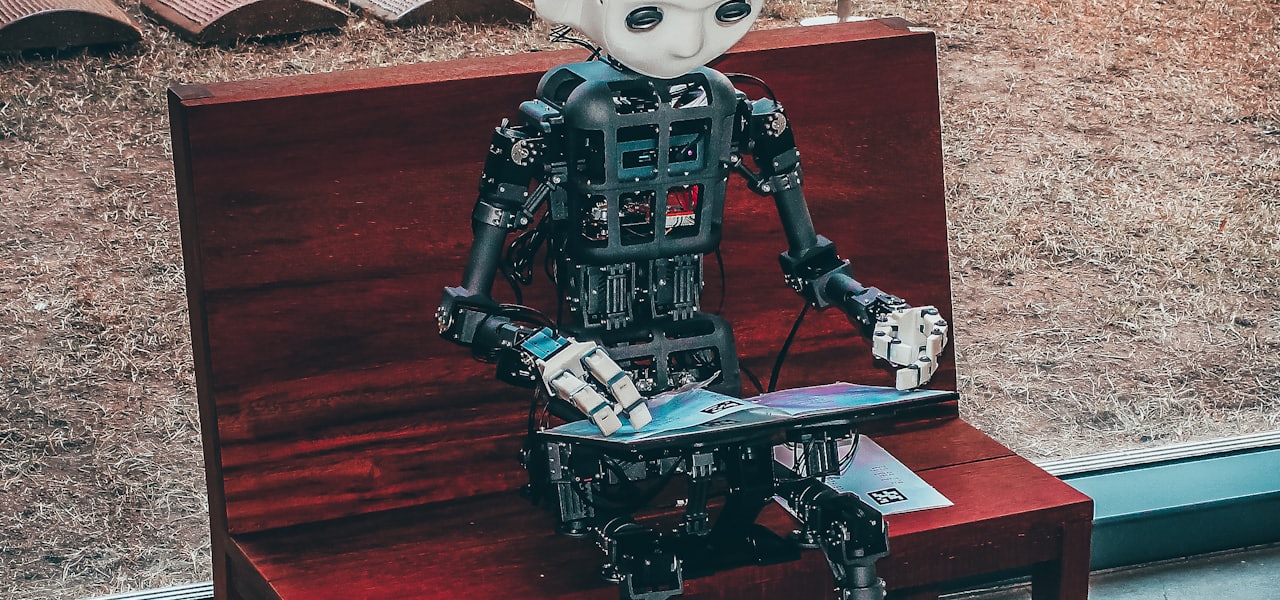
A pedagogical agent is a concept borrowed from computer science and artificial intelligence and applied to education, usually as part of an intelligent tutoring system (ITS). It is a simulated human-like interface between the learner and the content, in an educational environment. A pedagogical agent is designed to model the type of interactions between a student and another person. Mabanza and de Wet define it as "a character enacted by a computer that interacts with the user in a socially engaging manner". A pedagogical agent can be assigned different roles in the learning environment, such as tutor or co-learner, depending on the desired purpose of the agent. "A tutor agent plays the role of a teacher, while a co-learner agent plays the role of a learning companion". == History == The history of Pedagogical Agents is closely aligned with the history of computer animation. As computer animation progressed, it was adopted by educators to enhance computerized learning by including a lifelike interface between the program and the learner. The first versions of a pedagogical agent were more cartoon than person, like Microsoft's Clippy which helped users of Microsoft Office load and use the program's features in 1997. However, with developments in computer animation, pedagogical agents can now look lifelike. By 2006 there was a call to develop modular, reusable agents to decrease the time and expertise required to create a pedagogical agent. There was also a call in 2009 to enact agent standards. The standardization and re-usability of pedagogical agents is less of an issue since the decrease in cost and widespread availability of animation tools. Individualized pedagogical agents can be found across disciplines including medicine, math, law, language learning, automotive, and armed forces. They are used in applications directed to every age, from preschool to adult. == Learning theories related to pedagogical agent design == === Distributed cognition theory === Distributed cognition theory is the method in which cognition progresses in the context of collaboration with others. Pedagogical agents can be designed to assist the cognitive transfer to the learner, operating as artifacts or partners with collaborative role in learning. To support the performance of an action by the user, the pedagogical agent can act as a cognitive tool as long as the agent is equipped with the knowledge that the user lacks. The interactions between the user and the pedagogical agent can facilitate a social relationship. The pedagogical agent may fulfill the role of a working partner. === Socio-cultural learning theory === Socio-cultural learning theory is how the user develops when they are involved in learning activities in which there is interaction with other agents. A pedagogical agent can: intervene when the user requests, provide support for tasks that the user cannot address, and potentially extend the learners cognitive reach. Interaction with the pedagogical agent may elicit a variety of emotions from the learner. The learner may become excited, confused, frustrated, and/or discouraged. These emotions affect the learners' motivation. === Extraneous Cognitive Load === Extraneous cognitive load is the extra effort being exerted by an individual's working memory due to the way information is being presented. A pedagogical agent can increase the user's cognitive load by distracting them and becoming the focus of their attention, causing split attention between the instructional material and the agent. Agents can reduce the perceived cognitive load by providing narration and personalization that can also promote a user's interest and motivation. While research on the reduction of cognitive load from pedagogical agents is minimal, more studies have shown that agents do not increase it. == Effectiveness == It has been suggested by researchers that pedagogical agents may take on different roles in the learning environment. Examples of these roles are: supplanting, scaffolding, coaching, testing, or demonstrating or modelling a procedure. A pedagogical agent as a tutor has not been demonstrated to add any benefit to an educational strategy in equivalent lessons with and without a pedagogical agent. According to Richard Mayer, there is some support in research for pedagogical agent increasing learning, but only as a presenter of social cues. A co-learner pedagogical agent is believed to increase the student's self-efficacy. By pointing out important features of instructional content, a pedagogical agent can fulfill the signaling function, which research on multimedia learning has shown to enhance learning. Research has demonstrated that human-human interaction may not be completely replaced by pedagogical agents, but learners may prefer the agents to non-agent multimedia systems. This finding is supported by social agency theory. Much like the varying effectiveness of the pedagogical agent roles in the learning environment, agents that take into account the user's affect have had mixed results. Research has shown pedagogical agents that make use of the users’ affect have been found to increase user knowledge retention, motivation, and perceived self-efficacy. However, with such a broad range of modalities in affective expressions, it is often difficult to utilize them. Additionally, having agents detect a user's affective state with precision remains challenging, as displays of affect are different across individuals. == Design == === Attractiveness === The appearance of a pedagogical agent can be manipulated to meet the learning requirements. The attractiveness of a pedagogical agent can enhance student's learning when the users were the opposite gender of the pedagogical agent. Male students prefer a sexy appearance of a female pedagogical agents and dislike the sexy appearance of male agents. Female students were not attracted by the sexy appearance of either male or female pedagogical agents. === Affective Response === Pedagogical agents have reached a point where they can convey and elicit emotion, but also reason about and respond to it. These agents are often designed to elicit and respond to affective actions from users through various modalities such as speech, facial expressions, and body gestures. They respond to the affective state of the given user, and make use of these modalities using a wide array of sensors incorporated into the design of the agent. Specifically in education and training applications, pedagogical agents are often designed to increasingly recognize when users or learners exhibit frustration, boredom, confusion, and states of flow. The added recognition in these agents is a step toward making them more emotionally intelligent, comforting and motivating the users as they interact. === Digital Representation === The design of a pedagogical agent often begins with its digital representation, whether it will be 2D or 3D and static or animated. Several studies have developed pedagogical agents that were both static and animated, then evaluated the relative benefits. Similar to other design considerations, the improved learning from static or animated agents remains questionable. One study showed that the appearance of an agent portrayed using a static image can impact a user's recall, based on the visual appearance. Other research found results that suggest static agent images improve learning outcomes. However, several other studies found user's learned more when the pedagogical agent was animated rather than static. Recently a meta-analysis of such research found a negligible improvement in learning via pedagogical agents, suggesting more work needs to be done in the area to support any claims.
Color science
Color science is the scientific study of color including lighting and optics; measurement of light and color; the physiology, psychophysics, and modeling of color vision; and color reproduction. It is the modern extension of traditional color theory. == Organizations == International Commission on Illumination (CIE) Illuminating Engineering Society (IES) Inter-Society Color Council (ISCC) Society for Imaging Science and Technology (IS&T) International Colour Association (AIC) Optica, formerly the Optical Society of America (OSA) The Colour Group Society of Dyers and Colourists (SDC) American Association of Textile Chemists and Colorists (AATCC) Association for Research in Vision and Ophthalmology (ARVO) ACM SIGGRAPH Vision Sciences Society (VSS) Council for Optical Radiation Measurements (CORM) == Journals == The preeminent scholarly journal publishing research papers in color science is Color Research and Application, started in 1975 by founding editor-in-chief Fred Billmeyer, along with Gunter Wyszecki, Michael Pointer and Rolf Kuehni, as a successor to the Journal of Colour (1964–1974). Previously most color science work had been split between journals with broader or partially overlapping focus such as the Journal of the Optical Society of America (JOSA), Photographic Science and Engineering (1957–1984), and the Journal of the Society of Dyers and Colourists (renamed Coloration Technology in 2001). Other journals where color science papers are published include the Journal of Imaging Science & Technology, the Journal of Perceptual Imaging, the Journal of the International Colour Association (JAIC), the Journal of the Color Science Association of Japan, Applied Optics, and the Journal of Vision. == Conferences == Congress of the International Color Association IS&T Color and Imaging Conference (CIC) SIGGRAPH International Symposium for Color Science and Art == Selected books == Berns, Roy S. (2019). Billmeyer and Saltzman's Principles of Color Technology (4th ed.). Wiley. doi:10.1002/9781119367314. 3rd ed. (2000). Daw, Nigel (2012). How Vision Works: The Physiological Mechanisms Behind What We See. Oxford. doi:10.1093/acprof:oso/9780199751617.001.0001. Elliot, Andrew J.; Fairchild, Mark D.; Franklin, Anna, eds. (2015). Handbook of Color Psychology. Cambridge. doi:10.1017/CBO9781107337930. Fairchild, Mark D. (2013). Color Appearance Models (3rd ed.). Wiley. doi:10.1002/9781118653128. Author's website. 2nd ed. (2005). Hunt, Robert W. G. (2004). The Reproduction of Colour (6th ed.). Wiley. doi:10.1002/0470024275. Kuehni, Rolf G. (2012). Color: An Introduction to Practice and Principles (3rd ed.). Wiley. doi:10.1002/9781118533567. 1st ed. (1997). Luo, Ming R., ed. (2016). Encyclopedia of Color Science and Technology. Springer. doi:10.1007/978-1-4419-8071-7. MacAdam, David L., ed. (1970). Sources of Color Science. MIT Press. Reinhard, Erik; Khan, Erum Arif; Akyuz, Ahmet Oguz; Johnson, Garrett (2008). Color Imaging: Fundamentals and Applications. CRC Press. doi:10.1201/b10637. Schanda, János, ed. (2007). Colorimetry: Understanding the CIE System. Wiley. doi:10.1002/9780470175637. Shamey, Renzo; Kuehni, Rolf G. (2020). Pioneers of Color Science. Springer. doi:10.1007/978-3-319-30811-1. Wyszecki, Günter; Stiles, Walter S. (1982). Color Science: Concepts and Methods, Quantitative Data and Formulae (2nd ed.). Wiley.
CrewAI
CrewAI is an open-source software framework and platform for building AI agents and multi-agent systems. Written primarily in Python, it is used to define artificial-intelligence agents, assign tasks to them, and coordinate their work through agent teams and workflows. The framework is associated with CrewAI Inc., a startup developing enterprise tools for automating business workflows with large language model-based agents. == History == CrewAI was first released on the Python Package Index in December 2023. The project was created by João Moura and later developed by CrewAI Inc. and open-source contributors. In October 2024, TechCrunch reported that CrewAI had raised $18 million across seed and Series A funding rounds from investors including Boldstart Ventures, Craft Ventures, Earl Grey Capital, and Insight Partners. The report also stated that Andrew Ng and HubSpot co-founder Dharmesh Shah had invested in the company. SiliconANGLE described the company as the developer of an open-source framework for building artificial-intelligence agents and reported that the funding consisted of a seed round led by Boldstart Ventures and a Series A led by Insight Partners. By late 2024, CrewAI had introduced commercial enterprise products built on top of its open-source components. TechCrunch reported that the company's enterprise offering added access controls, analytics, support, and templates for workflow automation. == Features == CrewAI is designed around groups of agents, sometimes called "crews", that can be assigned roles, goals, and tasks. The framework supports agent collaboration, task delegation, tool use, memory, and knowledge sources for retrieval-augmented generation workflows. The project describes two main building blocks: "Crews", which are used for autonomous agent collaboration, and "Flows", which are used for more controlled event-driven workflows. The framework is independent of LangChain and is released under the MIT License. It can be installed as a Python package and is commonly used with external large language model APIs or local models, depending on the developer's configuration. == Business model == CrewAI combines an open-source framework with commercial enterprise products. Its enterprise products are intended for organizations that need to build, monitor, and manage agent-based automations with additional security, observability, and administrative controls.